

ProSupps Case Study: PDP redesigned
ProSupps — a global sports-nutrition brand known for supplements like HYDE® and JEKYLL®.
Shopify Platinum Partner Serving
Hong Kong, HKCustom Shopify and Shopify Plus development for Hong Kong brands — Central, Kowloon, Causeway Bay, and beyond.


We're a Shopify Platinum Partner and Shopify development company building online stores for Hong Kong merchants. Our work here concentrates on what this market actually needs: local payment gateway integration, storefronts in multiple languages, and cross-border B2B for the trading companies and manufacturers moving goods across Asia and into Western markets.
One thing worth knowing upfront: Shopify Payments is not available in Hong Kong. That changes how every store here has to be built, and it's the first thing we scope. More on it below.
We serve Hong Kong merchants remotely from offices in New York, Miami and Los Angeles. Projects start around $20,000 USD. Typical build is 8 to 12 weeks.
The best Shopify agency for your business is the one whose credentials you can verify. Here are ours.
Shopify confirms that reviewers are real clients. Checkable in about ten seconds on the Shopify Partner Directory, which is the point.
This is the single most consequential fact about building a Shopify store in Hong Kong, and most agency pages skip it entirely.
Shopify Payments is unavailable in Hong Kong. Every Hong Kong merchant must use a third-party payment gateway, which has three direct consequences:
Shopify supports over 70 local payment methods available to Hong Kong merchants through third-party gateways, so the coverage exists. The constraint is which gateway you pick, since that determines the subset your customers actually see at checkout.
Card-only checkout leaves money on the table here. Hong Kong customers expect the payment methods they use daily, and cross-border customers in mainland China expect theirs. That means Alipay, WeChat Pay and increasingly FPS, alongside international cards. Selling into mainland China without WeChat Pay or Alipay isn't an incomplete checkout, it's effectively no checkout at all for a large share of buyers.
The gateway you pick determines which of these you can offer, so it's worth deciding before the build rather than after.
Traditional Chinese and English aren't an international rollout in Hong Kong, they're the baseline. Add Simplified Chinese if you sell into the mainland.
Done properly that means translated product data and metafields rather than a translation widget, hreflang configured so each language version can rank independently, and localized checkout and transactional email. Done badly it means a translate button that search engines ignore and local customers don't trust.
Hong Kong is among the most mobile-first commerce markets in the world. Mobile commerce accounts for a substantial majority of ecommerce transactions here, which means a desktop-first build with a mobile adaptation is the wrong way round. Fast loading on mobile devices isn't a technical nicety, it's the primary conversion lever. See Shopify speed optimization.
Hong Kong has one of the highest ecommerce participation rates anywhere, with over 80% of consumers shopping online regularly, and a substantial majority of those transactions happening on mobile.
Hong Kong's trading companies and manufacturers sell across Asia and into Western markets simultaneously. That's a multi-currency, multi-market, multi-language problem plus a B2B layer — gated portals with account-level pricing, net terms and quantity breaks, connected to ERP and enterprise systems. See Shopify B2B development.
Brands selling into the US and EU also inherit accessibility obligations there. ADA in the United States and the European Accessibility Act, in force since June 2025, are separate standards and a store serving both markets needs both addressed.
Hong Kong has a genuine ecosystem of digital agencies, and the top Shopify development companies differ from the general web design firms in ways worth checking.
Our fuller guide: how to choose a Shopify agency.
The biggest shift in 2026 is that your storefront is no longer read only by humans.
Shopify deployed Storefront MCP servers to every store in early 2026 under the Universal Commerce Protocol, an open standard co-developed with Google. When a customer asks an AI assistant to find a product, the agent queries that endpoint and reads your structured product data rather than browsing your site.
For multi-language Hong Kong stores this has a specific consequence. An agent parsing your catalog reads product data, not your rendered page. If your Chinese-language content lives in a translation widget rather than in translated metafields, it may be invisible to agents entirely — the same architectural decision that determines whether your Chinese pages rank now also determines whether they're discoverable by AI.
Run a product search against your own store's MCP endpoint and read what an agent sees. Check Sales channels → AI agents in your Shopify admin.

We help direct-to-consumer brands grow by designing, building, and optimizing high-performing Shopify stores whether it's a full site redesign, a migration to Shopify, or ongoing conversion rate optimization and UX improvements.

We create seamless Shopify POS integrations that connect your online and in-store systems—so sales, inventory, and customer data all stay in sync.

We help brands launch and scale B2B on Shopify—customizing the experience for every buyer, from wholesale to trade and beyond.
We help direct-to-consumer brands grow by designing, building, and optimizing high-performing Shopify stores whether it's a full site redesign, a migration to Shopify, or ongoing conversion rate optimization and UX improvements.
We create seamless Shopify POS integrations that connect your online and in-store systems—so sales, inventory, and customer data all stay in sync.
We help brands launch and scale B2B on Shopify—customizing the experience for every buyer, from wholesale to trade and beyond.
Editorial storefronts, lookbooks, and variant/size UX built to convert.
Subscriptions, samples, and routine-based merchandising on Shopify.
High-volume catalogs, bundles, and direct-to-consumer + retail inventory sync.
Subscriptions, perishable logistics, and local pickup / POS.
Gated portals, account-level pricing, and ERP-connected ordering.
Unified online and in-store inventory, customers, and checkout.
New store builds and custom themes reflecting your brand identity, built for a user-friendly experience across mobile devices rather than configured from a template.
Selecting and integrating the right gateway for your customer base, with local payment options including Alipay and WeChat Pay alongside international cards.
Traditional Chinese, Simplified Chinese and English storefronts with proper translation architecture, hreflang and localized checkout, using Shopify Markets for market-specific pricing.
Gated access, account-level pricing, net terms and quantity breaks for trading companies and manufacturers, connected to ERP and enterprise systems. See Shopify B2B development.
Connecting Shopify to ERP, PIM, inventory management and CRM systems, plus third-party apps and API integrations, scoped so they stay maintainable. See Shopify ERP integration.
Plus starts from roughly $2,300 USD monthly and adds checkout customization through Shopify Functions, native B2B, multi-store architecture for global markets, higher API limits and 24/7 support. For Hong Kong merchants the deep localization capability is often the deciding factor. See Shopify Plus development and Shopify Plus vs Shopify.
Unified online and in-store inventory, customers and checkout for brands running physical retail alongside ecommerce. If you have a shop in Central and a store online, they should be reading from one source of truth rather than reconciling manually.
From Magento, WooCommerce, BigCommerce or custom platforms, with secure transfer of databases and product catalogs, and SEO preservation through one-to-one redirect mapping. See Shopify Plus migration services and our migration guide.
Checkout simplification, page speed and mobile experience. A complicated checkout is where Hong Kong shoppers drop off, and slow loading is where they never arrive. See conversion rate optimization.
Technical SEO, site architecture and structured data across every language version.
Klaviyo flows and subscriptions. Retention marketing costs meaningfully less than acquisition, and it's usually the most underbuilt part of a store that already converts.
Post-launch monitoring, compatibility updates, performance work and iterative optimization.
We work with ecommerce businesses across different industries, and the common thread is a store that's outgrown what it was built for.
If your needs are genuinely simple, a good theme and a freelancer will serve you better and cost far less. We'll say so on the call.
Rated 5.0 from 38 reviews on the Shopify Partner Directory. Shopify verifies reviewers are actual clients.
Which gateway is your checkout actually built on?
We don't have a Hong Kong office. Our team works from New York, Miami and Los Angeles.
The honest version of the timezone question: Hong Kong runs 12 to 13 hours ahead of New York, so live overlap is limited to your early morning or our early evening. We schedule syncs deliberately inside that window and run everything else asynchronously through your project management tool, a shared Slack channel and transparent progress reporting.
For some teams that's an advantage — work lands overnight and you review it with your morning coffee. For teams who want daily live collaboration, a Hong Kong or Singapore-based agency will serve you better, and we'll say so rather than let you discover it in week three.
Every project gets a dedicated project lead and a consistent senior team: a Shopify solution engineer on architecture, developers, an ecommerce designer and a Klaviyo specialist. We deliver against agreed milestones with timely delivery and consistent quality, and we act on client feedback rather than defending decisions.

Top 5% of Shopify agencies, vetted by Shopify — with deep Plus and Premier experience.

You work with engineers who ship — not a rotating junior bench learning on your budget.

Shopify Plus builds with ERP, 3PL, and POS integrations, plus custom middleware.

Most clients stay with us for years of ongoing engineering, not a single project.

Modern, AI-assisted workflows that move faster without sacrificing quality.

Core Web Vitals, conversion rate optimization, and clean, maintainable code that scales.
Top 5% of Shopify agencies, vetted by Shopify — with deep Plus and Premier experience.
You work with engineers who ship — not a rotating junior bench learning on your budget.
Shopify Plus builds with ERP, 3PL, and POS integrations, plus custom middleware.
Most clients stay with us for years of ongoing engineering, not a single project.
Modern, AI-assisted workflows that move faster without sacrificing quality.
Core Web Vitals, conversion rate optimization, and clean, maintainable code that scales.
ProSupps — a global sports-nutrition brand known for supplements like HYDE® and JEKYLL®.
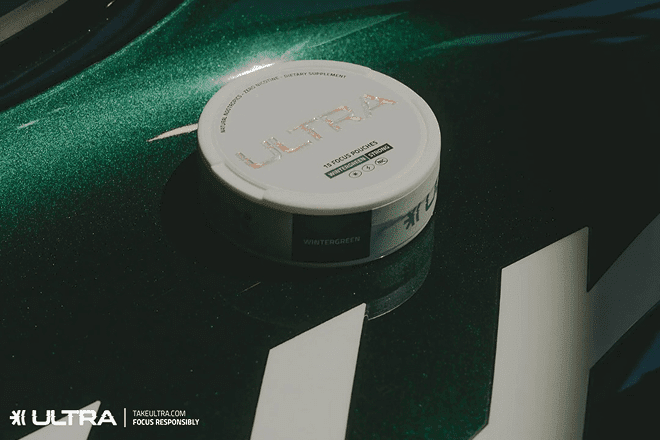

ULTRA focus pouches — a portable, on-the-go health product for instant focus and energy.

Wild Planet — a sustainable wild-caught seafood and consumer packaged goods brand; UX-driven redesign focused on subscriptions and ADA compliance.
From subscriptions to retention, upsells to reviews, we work with vetted, proven tech partners that enable performance, flexibility, and speed.
View All Partners
Shopify
We've worked with over 500+ Shopify merchants

Rebuy
Upsells, Smart Carts, AI Upsell reccomendations

Recharge
Subscriptions, Bundled Subscriptions, Gift with subscription

Yotpo
Reviews, Retention, Loyalty, and more

Loop
Returns that work with your 3PL, and maintain revenue

Klaviyo
E-Mail/SMS, Retention, Automation and Flows
No. Our offices are in New York, Miami and Los Angeles, and we work with Hong Kong merchants remotely with a dedicated project lead. Live overlap is limited given the time difference, so we schedule syncs deliberately and run the rest asynchronously. If daily live collaboration is essential, a local agency is the better fit.
No. Shopify Payments is not available in Hong Kong, so merchants must use a third-party payment gateway. This means Shopify's transaction fee applies to every order — 2% on Basic, 1% on Shopify, 0.6% on Advanced — on top of gateway charges, and Shop Pay accelerated checkout isn't available. It's worth modeling those fees against plan pricing, since a higher plan often pays for itself.
Yes, through the appropriate payment gateway. For Hong Kong merchants and anyone selling into mainland China, these aren't optional extras — card-only checkout loses a large share of buyers. Gateway selection determines which methods you can offer, so it should be decided before the build.
Yes. Proper multi-language builds use translated product data and metafields with hreflang configured so each version can rank independently, plus localized checkout and transactional email. Translation widgets generally aren't indexed by search engines and, increasingly, aren't readable by AI shopping agents either.
Yes. Shopify Plus supports gated catalogs, account-level pricing, quantity breaks and net terms natively, connected to your ERP and inventory systems. For many Hong Kong trading companies this replaces a legacy B2B platform at materially lower cost.
Shopify Plus starts from roughly $2,300 USD per month depending on contract terms. For Hong Kong merchants the deciding factors are usually deep localization for multiple markets, checkout customization, native B2B and higher API limits.
Not if it's planned properly. We map redirects one to one, audit content on top-ranking pages before it moves, and transfer product data and customer records intact. This matters more on multi-language stores, where each language version needs its own redirect map.
Design-and-build projects start around $20,000 USD, quoted as a line-item estimate. Retainers start at 20-hour engagements or $3,000 per month for ongoing support and optimization.
Yes. We work with brands across Asia and internationally, particularly those selling cross-border into Western markets where we can help with US and EU accessibility compliance alongside the build.
Builds and maintains your ecommerce website: custom theme development, payment gateway and system integrations, migrations from other platforms, conversion work and ongoing support. The better ones start with your business goals and ecommerce strategy rather than a feature list, and tell you when a smaller engagement would serve you better.
To a point. We'll advise on platform choice, architecture and what to build in what order, because those decisions determine what's possible later. We don't do brand strategy or marketing planning — for that you want a specialist, and we'll say so.
Both. The deciding factor is complexity rather than revenue. A small online business with multi-language requirements, local payment integration and an ERP connection is a genuine Shopify development project. A larger business with a straightforward catalog may not need us at all.
Tell us your revenue, your current platform, which markets you sell into, and what's actually not working. If a local agency is the better fit, we'll say so.
Design-and-build projects start around $20,000 USD, quoted as a line-item estimate. Retainers start at 20-hour engagements or $3,000 per month — full pricing detail on Shopify Plus cost.
Ready to grow your Hong Kong brand on Shopify?


