

ProSupps Case Study: PDP redesigned
ProSupps — a global sports-nutrition brand known for supplements like HYDE® and JEKYLL®.
Shopify Platinum Partner Serving
New York City, NYCustom Shopify development for New York City-area brands — from Manhattan and Brooklyn to Queens and Jersey City.


This guide is for founders and ecommerce leads at New York brands evaluating a Shopify partner: what to verify, what to expect in scope, and what to hold an agency to after launch. We are a Shopify agency in NYC at 480 Broadway in SoHo, working with New York brands including Tuft NYC and the Los Angeles Apparel SoHo flagship.
The urgency in this market is not competitive posturing. New York City carries the densest concentration of DTC brands in the United States, which means your buyers compare more online stores in a session than they would anywhere else, and the margin between a good store and a great one is measured in a point or two of conversion. Picking the right Shopify agency matters more here than in most markets, because the comparison set is larger.
Why Shopify businesses in New York City choose SOLO MEDIA GROUP
New York City is a global center for fashion and apparel, beauty, and specialty food and grocery, and our NYC office puts our team on the ground with the founders building here. For fashion and beauty labels we engineer direct-to-consumer subscriptions and conversion-rate optimization that perform under intense traffic, on fast and ADA-accessible storefronts. Multi-location retailers across the five boroughs get Shopify POS and retail integrations that unify shops and online. Distributors and wholesalers get B2B portals with account pricing and ERP integrations. Our senior developers and AI-assisted workflows take mid-market to enterprise brands from a clean migration to sustained growth across Shopify and Shopify Plus.
Our New York office: 480 Broadway, New York, NY 10013.
As one of the top Shopify agencies working with mid-market and enterprise DTC merchants, Solo Media Group helps brands unlock the full potential of the platform. We build, migrate and optimize stores for companies where ecommerce is the primary revenue channel, not a side channel, and we work with New York brands from our SoHo office at 480 Broadway.
Since 2018 we have delivered 75+ replatforms and custom builds, and we hold Platinum status, the top tier of Shopify's Service Track. One in-house team handles strategy, design and engineering from first call to post-launch support.

We help direct-to-consumer brands grow by designing, building, and optimizing high-performing Shopify stores whether it's a full site redesign, a migration to Shopify, or ongoing conversion rate optimization and UX improvements.

We create seamless Shopify POS integrations that connect your online and in-store systems—so sales, inventory, and customer data all stay in sync.

We help brands launch and scale B2B on Shopify—customizing the experience for every buyer, from wholesale to trade and beyond.
We help direct-to-consumer brands grow by designing, building, and optimizing high-performing Shopify stores whether it's a full site redesign, a migration to Shopify, or ongoing conversion rate optimization and UX improvements.
We create seamless Shopify POS integrations that connect your online and in-store systems—so sales, inventory, and customer data all stay in sync.
We help brands launch and scale B2B on Shopify—customizing the experience for every buyer, from wholesale to trade and beyond.
Editorial storefronts, lookbooks, and variant/size UX built to convert.
Subscriptions, samples, and routine-based merchandising on Shopify.
High-volume catalogs, bundles, and direct-to-consumer + retail inventory sync.
Subscriptions, perishable logistics, and local pickup / POS.
Gated portals, account-level pricing, and ERP-connected ordering.
Unified online and in-store inventory, customers, and checkout.
New York brands typically run retail, wholesale and direct-to-consumer at once, which turns a storefront into an inventory, pricing and fulfillment problem rather than a design one. That is the local complexity in a sentence, and it is why a generalist web shop struggles here.
Enterprise brands in this market also tend to arrive with an existing stack rather than a blank slate, which means the work is integration and migration before it is design.
At enterprise scale the demands change shape. Shopify Plus lifts inventory locations from 10 to 200, includes your primary store plus nine expansion storefronts, allows unlimited B2B pricing catalogs against a cap of three, and opens checkout to customization through Checkout UI Extensions. Enterprise retailers running a SoHo flagship, a wholesale channel and a DTC store hit at least two of those ceilings.
Shopify's Spring '26 Edition launched on 17 June 2026 with more than 150 updates, led by agentic commerce. Agentic Storefronts activates automatically for eligible merchants, with products syndicated to AI channels through Shopify Catalog at no additional cost. Shopify merchants can now be discovered inside ChatGPT, Microsoft Copilot, AI Mode in Google Search and the Gemini app, and the merchant remains merchant of record throughout.
The practical consequence for AI search is that clean, structured product data now decides who gets recommended. AI agents do not browse a storefront. They parse structured data. Technical SEO and product data structure have become a discovery function rather than a housekeeping task, and agentic commerce rewards the same work: correct metafields, consistent attributes, accurate inventory and pricing.
One correction worth making, because a lot of coverage has not caught up. OpenAI scaled back Instant Checkout in March 2026. AI-referred buyers are now sent to your storefront to complete the purchase, which means the traffic arrives high-intent and your conversion rate optimization work decides what happens next. The same technical optimization that makes a store legible to search engines now makes it legible to agents, which is a rare case of one job serving two channels.
These are different services and most NYC brands buy the wrong one. Technical SEO is site architecture, structured data, Core Web Vitals and redirect integrity, built into how a store is engineered. SEO as a service is content strategy, keyword targeting and link acquisition, which is a marketing discipline. We do the first and not the second.
The distinction matters more since agentic commerce arrived. Shopify SEO in 2026 has two audiences: search engines that crawl your pages, and AI agents that parse your structured data. Both reward the same underlying work, which means the technical layer now does double duty.
What we handle. Collection architecture, metafield structure, structured data markup, Core Web Vitals measured against real user field data, canonical integrity, and redirect mapping on migrations. If you are searching for a Shopify SEO company in NYC because your rankings dropped after a replatform, that is a technical problem and it is ours. A migration SEO audit diagnoses the cause within 48 hours.
What we do not. Content production, keyword research as an ongoing program, or link building. For those, hire a Shopify SEO agency that specializes. We will work alongside them and say so on the call rather than selling you something we are not built for.
An agency claiming equal depth in development and SEO is usually strong at one.
Verify Shopify Plus partner status on Shopify's own Partner Directory, not the badge on an agency's site. The 2026 partner program runs five performance-based tiers in order: Registered, Select, Plus, Premier, Platinum. A Plus Partner badge sits in the middle with two tiers above it. We are listed at Platinum, the top tier.
Confirm Shopify-only focus in the proposal. An agency splitting attention across three platforms will have shallower Shopify expertise on all of them. Ask which platforms they build on and how many projects last year were Shopify. Deep Shopify knowledge shows up in the questions an agency asks you, not in the logos on its homepage.
Request NYC client references and case studies. Not logos. Named brands you can look up, ideally in New York City, with work you can inspect. Ours include Tuft NYC and the Los Angeles Apparel SoHo flagship. Ask to speak to two of them, and ask what went wrong rather than what went well.
Ask about on-site collaboration. In-person work in NYC makes creative workshops and brand strategy sessions materially easier, particularly at kickoff. Our office at 480 Broadway means that is available rather than theoretical.
Our fuller guide on how to choose a Shopify agency includes a reference call script and the questions other Shopify agencies find hardest to answer.
Every agency will tell you they are experienced. These five separate the ones who have done the work from the ones who have read about it.
| Ask this | Strong answer | Weak answer |
|---|---|---|
| Which API version are your live client apps running? | A current or recent version, with a stated policy for Shopify's quarterly releases | I'd have to check |
| What's the largest redirect map you've built? | A number, immediately | We always handle redirects carefully |
| How many POS locations have you deployed live? | A number | Vagueness, if retail matters to you |
| What went wrong on your last project? | Something specific and slightly uncomfortable | Nothing really |
| Who writes the code, and did they write the code on the project you just showed me? | Named people, in-house, on your project | The principals who ran the call are not the builders |
Our answers, since we are asking you to use this on us too. 59 POS locations live for HUK Gear. Design and engineering in one embedded team, the same people from architecture through to launch. On what went wrong, we will answer that on the call rather than in marketing copy.
The most useful question is the fourth. Every project has a problem, and an agency that cannot name one is either inexperienced or not being straight with you.
A credible scope covers integrations, custom development, architecture options and a defined support arrangement. The Shopify services worth paying for are the ones tied to a constraint you can name. If any of the four is missing from a proposal, it will surface later as a change order.
Enterprise integrations to request. ERP, PIM, WMS, 3PL and CRM. NYC brands commonly run a commerce stack spanning several of these, and the connection between them decides whether the store reduces operational load or adds to it. See Shopify ERP integration.
Custom development deliverables. Custom apps where no App Store app fits, Shopify Flow automations, custom features specific to how you operate, and app integrations built as maintainable middleware rather than stacked connectors. See Shopify app development.
Headless commerce in scope, where the architecture justifies it. Covered below.
Ongoing support. Ask what happens after launch, and whether it is written into the agreement. Ours is a 30-day support window on original scope, then a retainer from 20 hours or $3,000 per month. Monthly support should be defined before you sign, not negotiated after something breaks.
Tailored solutions rather than templates. The Shopify ecosystem now runs to thousands of apps, and a good partner will tell you which of them to install rather than build. Where an app fits, use it. Where nothing fits, that is when tailored solutions earn their cost.
Ready to talk about your New York City store?
Headless separates your storefront from Shopify's back end, giving you control over the front-end framework and the API layer. Shopify's refreshed Hydrogen, built with Vercel, is now compatible with any framework including Next.js. It is worth doing when you need that control, and expensive when you do not. See headless Shopify builds.
Evaluate honestly. Hydrogen, Next.js and API-first stacks give more control over how data is exposed, which can help with agentic optimization because you can shape exactly the API responses agents need. The trade-off is that Shopify's standard MCP endpoint is natively optimized for agent queries and needs no custom configuration. Headless is not automatically more AI-ready.
Require performance benchmarks before you commit. Ask for Core Web Vitals field data from a live headless build, not Lighthouse scores. The thresholds are LCP under 2.5 seconds, INP under 200 milliseconds and CLS under 0.1, measured at the 75th percentile of real users over a 28-day window.
Request example headless migrations, and ask what they cost to maintain. Most Shopify brands do not need headless. The honest test is whether a specific requirement demands it, not whether it sounds modern.
Shopify Plus development work splits into three tracks: theme, checkout and custom logic. Scope each separately so you can see what you are buying.
Start with an audit, not a mockup. A good agency analyzes your funnel, your navigation and your analytics before designing anything, because the conversion blockers are usually identifiable from data you already have.
Scope the design properly. Custom themes built on editable, well-structured sections your team can update without a developer ticket. Custom theme development should leave you able to publish a landing page without filing a request, and that is a build decision made early.
Brand identity carries more weight in this market than most, because NYC buyers see more competent stores. Where you already have a brand identity, we build from your Figma files rather than redesigning around them. Where you do not, that is a separate piece of work and we will say so before quoting.
Specify Shopify Functions and checkout work. Shopify Scripts stopped executing entirely on 30 June 2026, so any discount, shipping or payment logic that lived in the Script Editor has stopped applying. That logic now has to be rebuilt on Shopify Functions, delivered inside an app. Custom checkout work through Checkout UI Extensions is Plus-only.
Plan mobile-first and accessibility testing into the build rather than after it. We verify every UI change against WCAG 2.2 AA with axe-core, and check site speed against field data rather than lab scores. Those are ecommerce best practices rather than extras, and any agency treating them as line items to cut is telling you something. See Shopify speed optimization.
Map redirects before design starts, not in launch week. Shopify enforces fixed URL prefixes, so effectively every indexed URL changes on a platform migration. Build the map from three sources combined: a live crawl, 12 months of Search Console data, and your platform's historic URL table.
Prepare the data checklist. Products, variants, metafields, collections, customers, order history, discounts and reviews. Customer passwords cannot be migrated from any platform, so Shopify sends account activation invitations instead, and that email is a launch communication rather than an afterthought.
Schedule QA and a rollback plan. Decide what triggers a rollback before you need to decide it under pressure.
Set the support retainer before launch. The first fortnight after cutover is when problems surface.
We have delivered 75+ replatforms from Adobe Commerce, WooCommerce, BigCommerce, Wix and custom builds, and Shopify Plus development continues after launch rather than ending at it. Our free 100-point migration checklist covers the full sequence.
Test the product page first, because that is where most NYC brands lose the sale. Run a small number of well-formed tests rather than many weak ones, and hold each long enough to reach significance.
Implement email flows and subscription strategy. Klaviyo's own 2026 benchmark data shows automated flows generate roughly 41% of email marketing revenue from just 5.3% of sends, at around 18 times the revenue per recipient of campaigns. Most brands send campaigns and underbuild flows.
Deploy personalization and recommendations where you have the data to support them. Conversion optimization on a store with thin product data produces noise.
For CPG brands and consumer packaged goods businesses in particular, replenishment cadence is the highest-return retention lever and it belongs in a product metafield rather than a global app setting. See Shopify subscriptions setup.
Track four things monthly: conversion rate, average order value, customer lifetime value and repeat purchase rate. Everything else is diagnostic. Report them in one dashboard rather than across four tools.
Bear in mind field performance data lags by about a month, so a speed improvement deployed today will not appear in reporting until next cycle.
Three things, all checkable before you call us.
Platinum tier, verified on Shopify's own directory. Shopify's 2026 partner program runs five performance-based tiers: Registered, Select, Plus, Premier, Platinum. We are at the top one, held by roughly 86 agencies worldwide. That is not our claim about ourselves — it is Shopify's assessment on the one source we do not control. Check it before reading another word.
Named NYC clients you can look up. Tuft NYC, a New York barbershop and grooming brand. The Los Angeles Apparel flagship in SoHo, running Shopify POS with in-store pickup, DoorDash delivery integration and custom staff-specific POS tiles. Brands operating in this city, with work you can inspect.
Depth that is specific rather than broad. 500+ merchants served since March 2018, 75+ replatforms delivered, clients generating more than $500M a year on stores we built, rated 5.0 from 38 verified reviews. For HUK Gear that meant ERP integration plus inventory synced across 59 Shopify POS locations, built working directly with their CIO. That is the kind of project most agencies describe and few have run.
Why brands leave other agencies for us. ADEGEN, on our Shopify Partner Directory profile:
“Before working with them, we went through four or five different providers, and none came close to the level of service we've received from Johnathan, Michele, and their team.” — ADEGEN
And on migration specifically, Say It With A Condom:
“The project involved migrating from Magento, cleaning up years of technical debt, and setting up a new Shopify experience that finally feels clean, fast, and modern.” — Say It With A Condom
That pattern is common in New York. Brands cycle through agencies that can build a storefront but cannot solve the operational problem underneath it — the inventory sync, the wholesale pricing, the checkout logic — and each rebuild starts from zero.
And what "top agency" does not mean. Tier measures delivered track record, not fit. A Platinum agency built for enterprise B2B is the wrong choice for a brand-led storefront rebuild, and the reverse holds. Tier tells you an agency is real. The checklist above tells you whether it is right for your project. If we are not, we will say so on the call.
We are a Platinum-tier Shopify partner with an office at 480 Broadway in SoHo. Technical expertise and strategic thinking come from one senior team rather than being split between a design shop and a dev shop, and the same people stay on the project throughout. We support brands through the years after launch, not just to it, which is where most of our client relationships actually live.
On accountability, since it is the thing most agency relationships fail on. Ours runs on transparent reporting against the four KPIs above, monthly reviews rather than quarterly, and time reporting you can inspect. Regular performance reviews are what make a partnership measurable, and a client who cannot see the numbers cannot hold anyone to them.
What we do not do. We do not run paid media, PPC, content marketing, performance marketing or digital marketing campaigns. We build and maintain digital commerce experiences on Shopify, and we work alongside your media team or agency rather than replacing them. If someone is selling you Shopify Plus development and paid acquisition as one package, ask which half they are actually good at.
Full rates and what drives them: Shopify Plus cost.

Top 5% of Shopify agencies, vetted by Shopify — with deep Plus and Premier experience.

You work with engineers who ship — not a rotating junior bench learning on your budget.

Shopify Plus builds with ERP, 3PL, and POS integrations, plus custom middleware.

Most clients stay with us for years of ongoing engineering, not a single project.

Modern, AI-assisted workflows that move faster without sacrificing quality.

Core Web Vitals, conversion rate optimization, and clean, maintainable code that scales.
Top 5% of Shopify agencies, vetted by Shopify — with deep Plus and Premier experience.
You work with engineers who ship — not a rotating junior bench learning on your budget.
Shopify Plus builds with ERP, 3PL, and POS integrations, plus custom middleware.
Most clients stay with us for years of ongoing engineering, not a single project.
Modern, AI-assisted workflows that move faster without sacrificing quality.
Core Web Vitals, conversion rate optimization, and clean, maintainable code that scales.
ProSupps — a global sports-nutrition brand known for supplements like HYDE® and JEKYLL®.
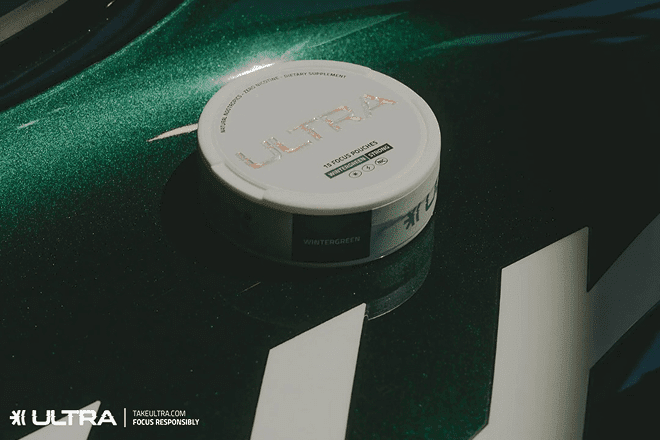

ULTRA focus pouches — a portable, on-the-go health product for instant focus and energy.

Wild Planet — a sustainable wild-caught seafood and consumer packaged goods brand; UX-driven redesign focused on subscriptions and ADA compliance.
From subscriptions to retention, upsells to reviews, we work with vetted, proven tech partners that enable performance, flexibility, and speed.
View All Partners
Shopify
We've worked with over 500+ Shopify merchants

Rebuy
Upsells, Smart Carts, AI Upsell reccomendations

Recharge
Subscriptions, Bundled Subscriptions, Gift with subscription

Yotpo
Reviews, Retention, Loyalty, and more

Loop
Returns that work with your 3PL, and maintain revenue

Klaviyo
E-Mail/SMS, Retention, Automation and Flows
A Shopify agency in New York designs, builds and maintains Shopify and Shopify Plus stores, covering strategy, web design, engineering, integrations and post-launch support. The best agency for your project is the one matched to your job, whether that is a replatform, an integration problem or ongoing engineering.
Check Shopify's Partner Directory, filterable by service and location. It shows real tier and is the one source an agency does not control. We are listed at Platinum, the top of five tiers.
Yes. We work with brands across all five boroughs, plus Jersey City, Hoboken and the wider NY/NJ metro. Our office at 480 Broadway in SoHo makes in-person kickoffs straightforward for most of them.
Technical SEO, yes — site architecture, structured data, Core Web Vitals and redirect integrity are built into how we develop. Content strategy, keyword programs and link building, no. For those you want a specialist, and we will work alongside them.
Start with Shopify's Partner Directory filtered to New York, which shows verified tier and is the one source agencies do not control. Then ask for local clients you can look up. Proximity matters less than proof, but an agency with an office and clients here has work you can verify.
Not necessarily. Plus is justified by a specific requirement: checkout customization, more than one storefront, per-account B2B pricing, more than 10 inventory locations, or roughly 20+ POS locations. Revenue alone is not a qualifying criterion.
Typically 8 to 16 weeks depending on integration count, catalog complexity and whether it is a net-new build or a platform migration. Feedback turnaround is the single biggest variable.
Ours: $150 per hour, hour blocks from 10 hours at $1,500, retainers from 20 hours at $3,000 per month, and projects from around $20,000 as a line-item estimate.
Probably not yet. Agentic Storefronts activate automatically for eligible Shopify merchants, but AI agents parse structured data rather than browsing your theme, so product data quality decides whether you are recommended. Clean metafields, consistent attributes and accurate inventory are the work.
Yes. Every build includes a 30-day support window on original scope, then ongoing Shopify support on retainer from 20 hours or $3,000 per month. Most of our clients stay for years.
Yes. We have offices in New York, Los Angeles and Miami, and work with brands across the US and internationally. The NYC office means in-person work is available where it helps.
Ready to grow your New York City brand on Shopify?


