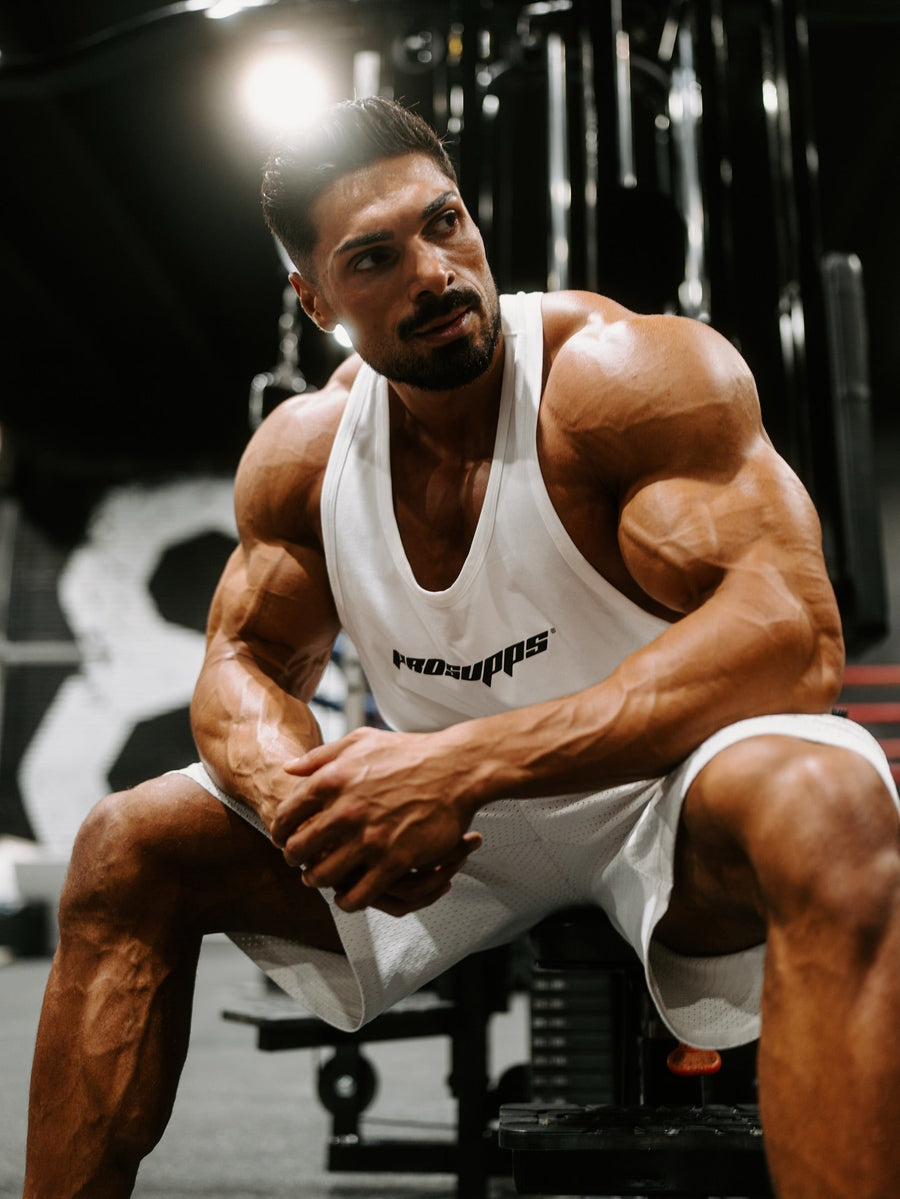

ProSupps Case Study: PDP redesigned
ProSupps — a global sports-nutrition brand known for supplements like HYDE® and JEKYLL®.
Shopify Platinum Partner Serving
Portland, ORCustom Shopify development for Portland-area brands — from the Pearl District and Hawthorne to Beaverton, Lake Oswego and Vancouver.


We hold Platinum tier, the top of Shopify's five partner tiers, assessed on delivered work and recalculated quarterly rather than earned once. We've built for 500+ merchants since March 2018, including 75+ replatforms, and our clients generate over $500 million annually on stores we built. We're rated 5.0 from 38 verified reviews on Shopify's own Partner Directory, where Shopify confirms reviewers are real clients. All of it is checkable in about ten seconds, which is rather the point.
Why Shopify businesses in Portland choose SOLO MEDIA GROUP
We're a Shopify Platinum Partner agency building Shopify and Shopify Plus stores for Portland ecommerce brands. Our work here concentrates where the market actually is: apparel and footwear, outdoor gear, craft food and beverage, and B2B portals for the distributors serving specialty retail.
We're a remote-first agency with offices in New York, Miami and Los Angeles, working Pacific time with Portland brands. Projects start around $20,000, and a typical build is 8 to 12 weeks.
Portland has two commerce problems that don't exist anywhere else in the same combination.
Oregon has no sales tax, and that catches Portland merchants out the moment they scale.
An Oregon brand selling locally has never configured sales tax. Nobody on the team has thought about it. Then direct-to-consumer growth pushes them past economic nexus thresholds in California, Washington, New York and a dozen other states, and suddenly they owe collection obligations in jurisdictions they've never operated in.
The failure pattern is consistent: a store built by someone who assumed Oregon rules apply everywhere, running for two years without collecting tax it was legally required to collect. The liability accrues quietly and surfaces during an audit or a funding round.
What we build for it: proper Shopify Tax configuration with nexus tracking by state, product tax codes set correctly for apparel and food categories where exemptions vary widely by jurisdiction, and clean reporting so your accountant isn't reconstructing two years of transactions manually. The determination itself is a question for your accountant rather than for us.
There's a second-order effect too. Your Portland retail location charges no sales tax at the register while your online checkout charges tax to an out-of-state customer for the identical product. That price discrepancy needs handling in how you present pricing across channels, or it generates support tickets and abandoned carts.
Portland is the footwear design capital of the country, and footwear is the single hardest category to model in Shopify.
Shopify allows three options per product. A shoe needs size, width and color. That's all three used, with nothing left for material, last, or anything else the brand differentiates on. Add half sizes and the variant count doubles before you've listed a second colorway.
Brands hit this and reach for a workaround. The wrong workaround produces product pages customers can't navigate, or a catalog where the same shoe appears as six separate listings, splitting reviews and confusing inventory.
Getting this right is architectural. Metafields for the attributes that don't need to be selectable variants, a product template built around how people actually shop for footwear, and inventory logic that survives a catalog where one style is genuinely 90 SKUs.
Outdoor and gear brands sell through specialty retail and direct simultaneously. That's channel conflict: pricing that doesn't undercut your dealer network, inventory that doesn't oversell across channels, and a catalog where wholesale and DTC share products without sharing prices. Get it wrong and you damage dealer relationships built over decades.
Craft food and beverage brands have shipping constraints most categories don't. State-by-state restrictions, perishability, weight-driven shipping costs, and subscription cadence tied to actual consumption rather than a default thirty days.
Portland runs on distributed work. The tech scene here has been remote-friendly for a decade, so a remote-first agency isn't a compromise. It's the norm, and Pacific time means full working-day overlap.
The biggest shift in 2026 is that your storefront is no longer only read by humans.
In January 2026, Shopify announced the Universal Commerce Protocol, an open standard co-developed with Google and backed by Amazon, Meta, Microsoft, Stripe and others. Alongside it, Shopify deployed Storefront MCP servers to every store, making each one directly queryable by AI shopping agents. US stores were automatically opted in during March 2026.
What that means practically: when a customer asks ChatGPT, Gemini or Copilot to find them a product, the agent doesn't browse your site. It queries your MCP endpoint and reads your structured product data.
The practical step, and almost nobody has done it: run a real product search against your own store's Storefront MCP endpoint and read exactly what an agent sees. In Shopify admin, check your settings under Sales channels → AI agents. Most merchants have never looked.

We help direct-to-consumer brands grow by designing, building, and optimizing high-performing Shopify stores whether it's a full site redesign, a migration to Shopify, or ongoing conversion rate optimization and UX improvements.

We create seamless Shopify POS integrations that connect your online and in-store systems—so sales, inventory, and customer data all stay in sync.

We help brands launch and scale B2B on Shopify—customizing the experience for every buyer, from wholesale to trade and beyond.
We help direct-to-consumer brands grow by designing, building, and optimizing high-performing Shopify stores whether it's a full site redesign, a migration to Shopify, or ongoing conversion rate optimization and UX improvements.
We create seamless Shopify POS integrations that connect your online and in-store systems—so sales, inventory, and customer data all stay in sync.
We help brands launch and scale B2B on Shopify—customizing the experience for every buyer, from wholesale to trade and beyond.
Editorial storefronts, lookbooks, and variant/size UX built to convert.
Subscriptions, samples, and routine-based merchandising on Shopify.
High-volume catalogs, bundles, and direct-to-consumer + retail inventory sync.
Subscriptions, perishable logistics, and local pickup / POS.
Gated portals, account-level pricing, and ERP-connected ordering.
Unified online and in-store inventory, customers, and checkout.
Rated 5.0 from 38 reviews on the Shopify Partner Directory. Shopify verifies that reviewers are actual clients, which is why we'd point you there before our own testimonials page.
Have you read what an AI agent sees on your store?
Custom Shopify builds with brand-led creative direction, not template configuration. Brand identity and storytelling carried into the product experience, with design decisions backed by behavioral data rather than preference. See Shopify Plus development.
Full-stack ecommerce development, custom development and API integrations where the platform doesn't cover what your business needs. See Shopify app development.
From Magento, WooCommerce, BigCommerce or custom platforms onto Shopify and Shopify Plus, with data migration, redirect mapping and SEO preserved. See Shopify Plus migration services and our store redesign and migration guide, and if a replatform has already cost you rankings, a migration SEO audit finds the cause in 48 hours.
Shopify Plus is built for mid-market to enterprise brands and adds capabilities standard plans don't: multi-channel selling, advanced automation through Shopify Flow, checkout customization via Shopify Functions, native B2B, expansion stores for new markets, and 24/7 platform support. We build against those capabilities rather than just enabling them. See Shopify Plus vs Shopify.
Gated catalogs, dealer-specific pricing, quantity breaks and net terms, connected to your ERP and inventory. Systems integration is where operational efficiency actually improves for a growing ecommerce business. See Shopify B2B development.
POS and inventory synchronization across your Portland retail location, pop-ups and online, running from one source of truth. See Shopify POS.
Connecting Shopify to the ERP, 3PL, CRM and third-party tools your operation already runs on, scoped so they stay maintainable. See Shopify ERP integration.
Headless architecture where a theme genuinely can't deliver what's needed. We'll tell you honestly when it can't justify the cost.
Performance optimization, page speed, technical SEO and checkout work aimed at conversion rate and average order value together. Fast-loading themes matter for both user experience and rankings. See conversion rate optimization and Shopify speed optimization.
Klaviyo automated flows and subscriptions. Personalized lifecycle messaging is usually the largest untapped lever on a store that already converts adequately.
Post-launch updates, security maintenance and iterative optimization. The first 90 days is where most of the value gets captured.
We're a Shopify development agency, not a full-service digital marketing shop. We don't run paid search, paid social or content marketing. That focus is deliberate: it means the team on your build brings real technical expertise to this specific platform rather than splitting attention across disciplines. If you want one partner covering acquisition and development together, we'll say so on the call and you should hire accordingly.
We're a remote-first agency. Our offices are in New York, Miami and Los Angeles, and we work Pacific time with Portland brands, so there's full working-day overlap rather than a few hours at the edges.
Every project gets a dedicated project lead and a consistent senior team: a Shopify solution engineer on architecture, developers, an ecommerce designer and a Klaviyo specialist. Project management runs through your tools with a shared Slack channel, weekly syncs and transparent reporting.
Transparent pricing. Projects are quoted as line-item estimates so you can see what each piece costs and adjust scope before signing. Retainers are fixed. Platform fees go directly to Shopify without markup through us. Full rates on Shopify Plus cost.
Clear, responsive communication is the thing clients actually judge an agency on, and it's what most agency relationships fail at. We'd rather be measured on it than claim it.

Top 5% of Shopify agencies, vetted by Shopify — with deep Plus and Premier experience.

You work with engineers who ship — not a rotating junior bench learning on your budget.

Shopify Plus builds with ERP, 3PL, and POS integrations, plus custom middleware.

Most clients stay with us for years of ongoing engineering, not a single project.

Modern, AI-assisted workflows that move faster without sacrificing quality.

Core Web Vitals, conversion rate optimization, and clean, maintainable code that scales.
Top 5% of Shopify agencies, vetted by Shopify — with deep Plus and Premier experience.
You work with engineers who ship — not a rotating junior bench learning on your budget.
Shopify Plus builds with ERP, 3PL, and POS integrations, plus custom middleware.
Most clients stay with us for years of ongoing engineering, not a single project.
Modern, AI-assisted workflows that move faster without sacrificing quality.
Core Web Vitals, conversion rate optimization, and clean, maintainable code that scales.
ProSupps — a global sports-nutrition brand known for supplements like HYDE® and JEKYLL®.


ULTRA focus pouches — a portable, on-the-go health product for instant focus and energy.

Wild Planet — a sustainable wild-caught seafood and consumer packaged goods brand; UX-driven redesign focused on subscriptions and ADA compliance.
From subscriptions to retention, upsells to reviews, we work with vetted, proven tech partners that enable performance, flexibility, and speed.
View All Partners
Shopify
We've worked with over 500+ Shopify merchants

Rebuy
Upsells, Smart Carts, AI Upsell reccomendations

Recharge
Subscriptions, Bundled Subscriptions, Gift with subscription

Yotpo
Reviews, Retention, Loyalty, and more

Loop
Returns that work with your 3PL, and maintain revenue

Klaviyo
E-Mail/SMS, Retention, Automation and Flows
No. We're a remote-first agency with offices in New York, Miami and Los Angeles, working Pacific time with Portland brands. We use shared project tools with a dedicated project lead and travel for kickoffs and major milestones where a project warrants it. Portland's distributed work culture means this suits most teams here.
Potentially yes, in other states. Oregon has no sales tax, so you have no in-state obligation, but selling to customers in states where you've crossed economic nexus thresholds creates a collection obligation there. Many Portland brands discover this years late. We configure Shopify Tax with nexus tracking and correct product tax codes, though the underlying determination is a question for your accountant.
Yes, and it's the most common Portland technical problem we solve. Shopify allows three options per product, which size, width and color consume entirely. The fix is architectural: metafields for attributes that don't need to be selectable, a product template built for how people shop for footwear, and inventory logic that holds up at 90 SKUs per style.
Yes. The work is architectural rather than visual: dealer-specific pricing that doesn't undercut your retail partners, channel-aware inventory preventing overselling, and a catalog where wholesale and DTC share products without sharing prices.
When you need checkout customization through Shopify Functions, native B2B, multi-store expansion into new markets, advanced automation, higher API limits or 24/7 platform support. If none apply, standard Shopify likely still serves you and we'll say so rather than upsell.
Not if it's planned properly. We map redirects one to one, audit content on top-ranking pages before it moves, and preserve technical SEO foundations along with customer data and order history. Rankings lost in a rushed migration typically take months to recover.
Yes. We build integrations connecting Shopify to ERP, inventory, 3PL, POS and CRM systems, scoped in writing so they're reliable and maintainable rather than fragile.
Design-and-build projects start around $20,000, quoted as a line-item estimate. Retainers start at 20-hour engagements or $3,000 per month for ongoing support and optimization.
Portland, Beaverton, Hillsboro, Lake Oswego, Tigard, Gresham, Vancouver and the wider Portland metro, plus brands across Oregon and the Pacific Northwest.
Yes. We're a Shopify Platinum Partner serving Portland, Beaverton, Hillsboro, Lake Oswego, Tigard, Gresham, Vancouver and the wider metro from offices in New York, Miami and Los Angeles. We've served 500+ merchants since March 2018 and delivered 75+ replatforms, rated 5.0 from 38 reviews on the Shopify Partner Directory. Projects start around $20,000, retainers from $3,000 a month, and Pacific time gives full working-day overlap.
Tell us your revenue, your current platform, and what's actually not working. If a targeted fix serves you better than a rebuild, we'll say so.
Ready to grow your Portland brand on Shopify?


